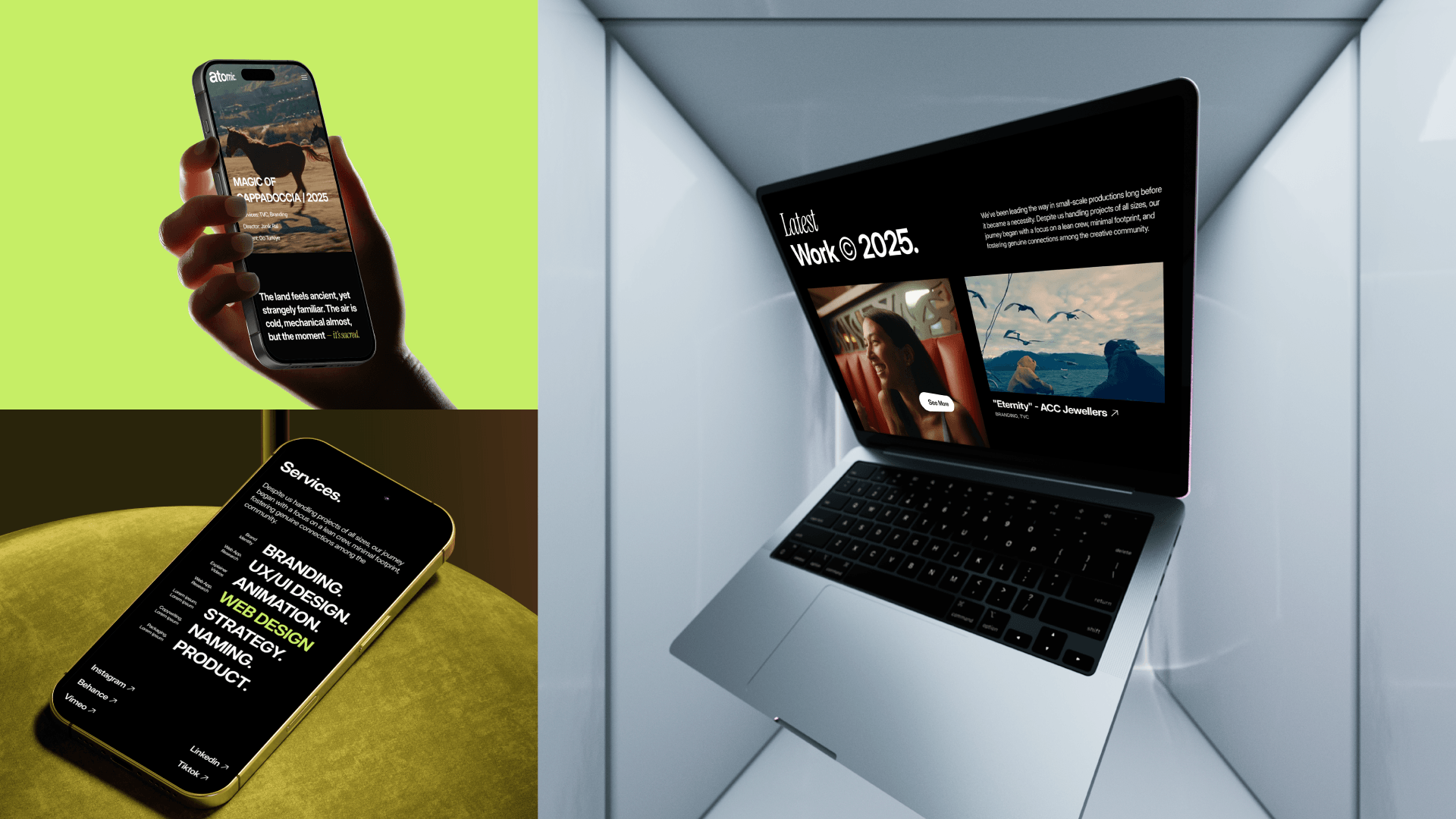
A product can look extraordinary in a prototype.
Smooth animations. Perfect spacing. Clean layouts. Carefully crafted interactions. Screens that feel polished and intentional. Stakeholders get excited. Investors are impressed. Demo videos look convincing.
Everything suggests the product is ready.
Then it launches.
Suddenly, the experience feels different. Pages load slower than expected. Interactions behave inconsistently. Some components look slightly off. Edge cases break layouts. Real data doesn’t fit the neat scenarios shown in design files. Features that felt obvious in demos confuse actual users.
Nothing is catastrophically broken.
But something isn’t right.
The product still resembles the prototype, yet the experience feels heavier, less precise, less trustworthy. Users struggle more than anticipated. Adoption is slower. Retention doesn’t match expectations.
This gap between prototype perfection and production reality is one of the most common reasons beautiful designs fail after launch.
And it rarely comes from poor design talent.
It comes from misunderstanding what it takes to move from concept to real-world product.
Why Prototypes Feel Better Than Real Products
Prototypes are controlled environments.
They show ideal paths. Perfect timing. Predictable interactions. No server delays. No network variability. No legacy constraints. No unexpected inputs.
Designers present flows that make sense. Every step leads logically to the next. Errors are minimized or omitted entirely. Users appear confident because the prototype assumes they will behave correctly.
This makes prototypes incredibly persuasive.
But it also makes them incomplete.
Real users don’t follow ideal paths. They click unexpected things. They hesitate. They multitask. They return after long gaps. They bring messy data, unclear goals, and inconsistent behavior.
A prototype answers the question, “How could this work?”
Production must answer, “How does this work in reality?”
Those are not the same problem.
The Illusion of Perfect Conditions
Design tools allow teams to create visually perfect environments.
Images are optimized. Text fits neatly. Content is curated. States are simplified. Loading is invisible. Animations run at consistent frame rates. Screen sizes are predictable.
Production environments are chaotic by comparison.
Users access products on old devices, slow networks, unusual screen dimensions, and accessibility settings designers may never see during development. Third-party integrations behave unpredictably. APIs respond slowly. External dependencies fail.
A design that looks flawless in a controlled setting may struggle under real-world variability.
Beauty without resilience doesn’t survive contact with reality.
Engineering Constraints Change Everything
Not all design decisions translate cleanly into code.
Some interactions are expensive to implement. Some animations affect performance. Some layouts require complex logic to remain responsive. Others depend on backend capabilities that don’t exist yet.
During development, compromises are made.
Transitions become simpler. Components are reused in ways designers didn’t anticipate. Timing changes. Visual nuances are lost. Spacing shifts slightly. Interactions become less fluid.
None of these changes seem dramatic individually.
Together, they alter the experience.
Design fidelity is not just about copying visuals. It requires technical alignment between design intent and engineering reality. When that alignment is missing, production inevitably diverges from the prototype.
Real Data Breaks Clean Designs
Prototype content is carefully curated.
Short names. Ideal images. Balanced numbers. Predictable categories. Clear scenarios.
Real data is messy.
Long text strings overflow containers. Missing values create awkward gaps. Unexpected combinations of inputs produce layouts no one tested. User-generated content introduces inconsistency.
Suddenly, the interface looks crowded or broken even though the structure hasn’t changed.
Designs that don’t account for messy data are fragile by definition. They only work under ideal conditions.
Robust products anticipate imperfection.
Edge Cases Multiply After Launch
Before launch, teams focus on primary user flows.
Sign up. Create something. Save. Share. Complete the core task.
After launch, secondary behaviors emerge.
Users cancel midway. They return after weeks. They attempt unsupported actions. They explore rarely used features. They trigger states designers never mocked.
Each of these situations requires UI responses.
Error states. Empty states. Recovery flows. Permissions issues. Conflicts. Notifications.
These scenarios often receive minimal design attention because they don’t appear in demos. Yet they shape the day-to-day experience far more than the ideal flow.
Products fail not because primary paths are broken, but because secondary paths feel unreliable.
Performance Is Part of UX
A design that feels smooth in a prototype may feel sluggish in production simply because real systems take time.
Data must load. Requests must resolve. Computation must happen. Security checks must run. Assets must download.
Even small delays change perception.
Interactions that feel instantaneous in design tools become frustrating when they require waiting. Animations meant to feel elegant become annoying if they delay task completion.
Performance isn’t a technical detail.
It’s a core part of the user experience.
Users don’t separate visual design from speed. They experience both as one unified system.
Communication Gaps Between Teams
Many prototype-to-production failures originate from organizational structure rather than technical limitations.
Design, product, and engineering teams often operate with different priorities and timelines. Designers optimize for clarity and aesthetics. Engineers optimize for stability and scalability. Product managers optimize for deadlines and scope.
Without continuous alignment, the product evolves in different directions simultaneously.
Assumptions replace explicit decisions.
Small misunderstandings accumulate.
By the time inconsistencies become visible, correcting them is expensive.
Great production experiences come from collaboration, not handoffs.
Why Visual Fidelity Isn’t Product Quality
Stakeholders often equate polished visuals with readiness.
If it looks finished, it must be finished.
But visual fidelity measures appearance, not robustness. A product can look refined while still being fragile under real conditions.
Quality emerges from how the system behaves when things are not ideal.
Can users recover from mistakes?
Can the interface handle unexpected input?
Does performance remain acceptable under load?
Are interactions predictable over time?
These factors rarely appear in prototypes, yet they determine long-term success.
Building for Production from Day One
Closing the gap between prototype and production requires a shift in mindset.
Design should consider constraints early. Engineering should participate in experience discussions. Product teams should plan for edge cases, performance, and real data from the beginning rather than treating them as post-launch issues.
This doesn’t mean limiting ambition.
It means designing for reality, not just possibility.
Prototypes should demonstrate not only how something looks, but how it behaves under imperfect conditions.
When teams build with production in mind, launch becomes an evolution rather than a shock.
Final Thoughts
Beautiful prototypes fail after launch not because teams lack talent, but because prototypes answer the wrong question.
They show what is possible, not what is sustainable.
Production products must survive real users, real data, real constraints, and real unpredictability. Success depends less on visual perfection and more on resilience, performance, and alignment across teams.
The companies that consistently ship products that feel as good in reality as they did in demos understand this difference.
They don’t treat design as a presentation artifact.
They treat it as a system that must function in the real world.
And in the end, users don’t care how impressive a prototype looked.
They care how reliable the product feels once it becomes part of their daily work.